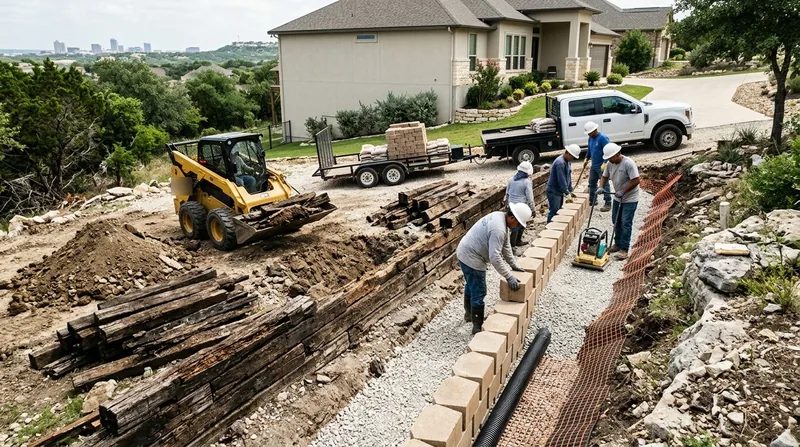




Railroad Tie Wall Replacement in San Antonio is one of the most common retaining wall projects we handle, particularly across the Hill Country neighborhoods north of Loop 410 and in the older residential areas of Alamo Heights, Leon Valley, and Helotes. Thousands of San Antonio homes built in the 1980s and 1990s relied on creosote-treated railroad ties for slope retention, but those ties are now rotting, leaning, and failing under the relentless South Texas sun and the repeated clay heave cycles that plague our black expansive soils. When a railroad tie wall starts to bow, settle unevenly, or show signs of decay, replacement is not optional. We remove the failed structure entirely, haul away the contaminated timber, and rebuild with either segmental block, poured concrete, or stacked limestone, depending on your site, budget, and the load requirements of your lot. This guide walks you through why this matters, how we approach the work, what it costs, and how to find a qualified contractor near you.
Why Railroad Tie Walls Fail in San Antonio and Why Replacement Matters
San Antonio sits directly on the Balcones Escarpment, and our climate and soil conditions are uniquely hostile to timber structures. The black expansive clay that covers much of the South and East Sides swells dramatically after heavy rain and shrinks and cracks open during drought. These cycles push and pull on old railroad tie walls from beneath, destabilizing the footing and causing the wall to tilt forward or collapse entirely. Creosote-treated ties also degrade over 30 to 40 years, especially when exposed to moisture and the intense UV radiation of a South Texas summer. A failing railroad tie wall is not just an eyesore, it is a safety and liability issue, and it accelerates erosion on your slope.
- Creosote-treated ties rot from the inside out, becoming structurally unreliable after three decades of South Texas weather.
- Clay heave and soil movement beneath the wall cause uneven settlement and forward lean.
- Improper or absent drainage behind the wall allows water buildup that adds hydrostatic pressure and accelerates failure.
- Older walls often rest on caliche or limestone bedrock without a proper footing, leading to sudden collapse during heavy rain events.
- A failed wall creates a liability for injuries and property damage, and may violate local building codes or HOA requirements.
Replacing a railroad tie wall is the only permanent solution, and doing it right means addressing the root causes of failure so your new wall lasts decades, not years.
Key info: Many San Antonio jurisdictions require a permit for walls above 4 feet measured from the footing, or when a wall supports a surcharge such as a driveway. Engineered drawings may be required for tall or tiered walls. Always verify setback and property-line rules with your local building department, as thresholds vary by city and neighborhood. Visit the City of San Antonio Development Services or your municipality's building division for current requirements.
How We Replace Railroad Tie Walls in San Antonio: A Step-by-Step Process
Our railroad tie wall replacement process is methodical and field-proven across San Antonio and the surrounding Hill Country. We start with a site inspection to assess the extent of the failure, identify the cause (clay heave, poor drainage, footing issues), and determine the best replacement material for your soil and slope. We then remove the old ties, haul away all contaminated timber, excavate and prepare the footing to proper depth and bearing, install new drainage systems to manage water flow, and rebuild the wall in your chosen material. The entire process typically takes 3 to 7 days depending on wall length, height, and site access.
- We excavate and remove all failed railroad ties and contaminated soil, then haul away the debris off-site.
- We dig down to undisturbed soil or competent bedrock and establish a proper footing below the frost line and clear of caliche layers.
- We install perforated drainage pipe and gravel backfill to manage groundwater and prevent hydrostatic pressure buildup.
- We build the new wall in segmental block, poured concrete, or stacked limestone, with proper compaction and alignment at every course.
- We backfill and grade the site, and ensure all drainage outlets are clear and functional.
This approach prevents the same failure modes from recurring and gives you a wall that will perform reliably for 50+ years.
Example: A homeowner in Shavano Park had a 45-foot railroad tie wall that was leaning noticeably and showing rot at the base. We removed the old ties, found that the footing had been set directly on caliche without any drainage, and rebuilt the wall in segmental block with a proper gravel and pipe drainage system behind it. The job took 5 days and cost $18,500. The new wall is level, properly draining, and will not shift.
Replacement Methods and Materials for Railroad Tie Walls
When you replace a railroad tie wall, you have several options for the new structure. Each material has its own cost, appearance, durability, and maintenance profile. The right choice depends on your budget, the height and length of the wall, your soil conditions, and your aesthetic preferences. Below is a comparison of the most common approaches we use across San Antonio.
| Approach | Description | Best for |
|---|---|---|
| Segmental Block (SRW) | Modular concrete units stacked and pinned, with gravel and drainage behind. Quick to install, durable, and allows for slight curves and tiering. | Most residential walls up to 8 feet tall, moderate to high load, good for Hill Country and flat sites alike. |
| Poured Concrete | Monolithic reinforced concrete wall, formed, poured, and finished on-site. Very strong, long-lasting, and minimal maintenance. | Tall walls, high loads, steep slopes, and sites where a seamless, uniform appearance is desired. |
| Stacked Limestone | Dry-stacked or mortared Texas limestone, hand-fitted to create a traditional, rustic appearance. Durable and blends with Hill Country landscape. | Historic neighborhoods, heritage properties, aesthetic-first projects, and sites where local stone is already present. |
| Timber Replacement (Non-Creosote) | Pressure-treated lumber or composite timbers, modern fastening, and proper drainage. Not creosote, so less environmental concern, but still requires maintenance. | Homeowners who want the timber look and are willing to maintain the wall every 5 to 10 years, or short-term budget constraints. |
Each material is installed with proper footing, drainage, and backfill to prevent the failures that took down your original railroad tie wall. We also offer retaining wall drainage solutions as part of any replacement to ensure long-term performance.
Railroad Tie Wall Replacement Cost in San Antonio: What to Expect
Railroad tie wall replacement in San Antonio typically starts at $35 per square foot for segmental block work on a straightforward site with good access and standard soil conditions. That figure can climb to $45 to $55 per square foot if the wall is tall, the site is steep or difficult to access, or if the footing requires significant excavation into caliche or limestone. Poured concrete walls often run $40 to $60 per square foot, while stacked limestone can range from $50 to $75 per square foot depending on stone quality and whether the wall is mortared or dry-stacked. Travel is included within San Antonio and surrounding areas, and we offer a free estimate within 24 hours.
Several factors influence the final price. The length and height of the wall are the primary drivers, since they determine the volume of material and labor. The condition of the existing footing and the depth of excavation required matter significantly, especially if caliche removal or rock removal is needed. Site access, slope steepness, and proximity to structures or utilities can add time and complexity. Drainage requirements, soil testing, and any engineered drawings or permits also factor into the cost. We always recommend getting 2 to 3 estimates from licensed contractors so you can compare scope, material, and price. Visit our pricing page for more detail on what moves the cost up or down.
The cheapest option is not always the best. A wall built on a poor footing or without proper drainage will fail again in 5 to 10 years, and you will pay twice. Investing in proper materials, drainage, and workmanship upfront saves money and headache in the long run.
What to Look for When Hiring a Railroad Tie Wall Replacement Contractor Near Me in San Antonio
Finding a qualified retaining wall contractor near San Antonio requires more than a quick Google search. You want someone who understands San Antonio soil, drainage challenges, and local building codes, and who has a track record of successful replacements in your neighborhood or similar terrain. Before you hire, verify that the contractor is licensed and insured, get written estimates from at least two firms, ask for references from recent jobs, and understand what permits and inspections are required for your wall. If your property is in an HOA or a historic district, confirm that the contractor is familiar with any restrictions or approval processes.
- Request at least three references from railroad tie wall replacement or general retaining wall projects completed in the past two years.
- Ask about the contractor's experience with San Antonio soil conditions, clay heave, and caliche layers specific to your neighborhood.
- Verify that the contractor will pull all required permits and coordinate with your local building department before work begins.
- Clarify what happens if the contractor encounters unexpected conditions during excavation, such as rock or utility lines.
- Get a written contract that specifies the scope of work, materials, timeline, payment schedule, and warranty or guarantee period.
We handle all permitting, provide free estimates, and stand behind our work with a solid warranty. Call us at (726) 200-6830 or request a free estimate online and we will inspect your wall and give you a clear, honest price within 24 hours.
Railroad Tie Wall Replacement in San Antonio: Pricing Guide
| Service | Price | Details |
|---|---|---|
| Segmental Block Replacement | Starting at $35/sq ft | Standard wall height to 8 feet, good site access, includes footing, drainage, and backfill material |
| Poured Concrete Replacement | Starting at $40/sq ft | Reinforced monolithic wall, tall or high-load applications, superior durability and minimal maintenance |
| Stacked Limestone Replacement | Starting at $50/sq ft | Hand-fitted Texas limestone, rustic or heritage aesthetic, mortared or dry-stacked based on site conditions |
| Difficult site or high excavation | On estimate | Caliche removal, rock excavation, steep slope, poor access, or complex footing requirements require site inspection |
| Travel and Estimate | Included/Free | No separate mileage charge within San Antonio and surrounding service areas, free estimate response within 24 hours |
Indicative pricing, the exact cost depends on square footage, finish, and site access. Free personalized estimate within 24h at (726) 200-6830.


