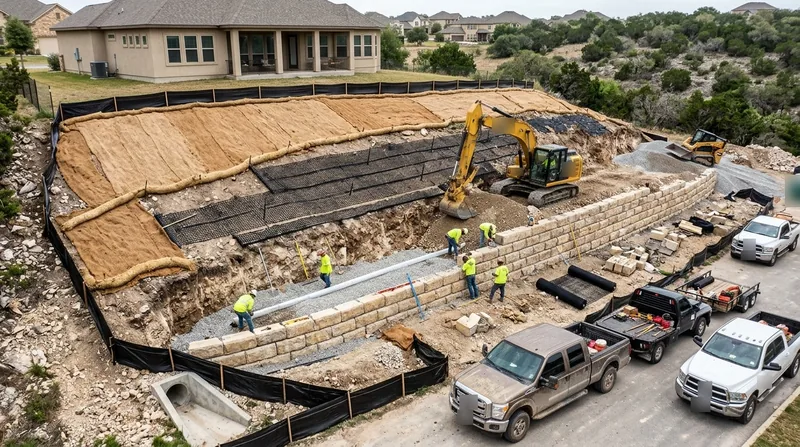




Slope Stabilization & Erosion Control in San Antonio protects your home, driveway, and yard from soil loss and structural failure on the sloped lots that define the Hill Country edge and creek-side properties across the metro area. San Antonio sits squarely on the Balcones Escarpment, where thin rocky soil over Edwards limestone and caliche layers on the north side meet black expansive clay on the south and east sides that heaves after rain and cracks open in drought. When heavy South Texas downpours hit, water runs fast across unprotected slopes, washing away topsoil and destabilizing foundations and walls. We install terraced retaining walls, geogrid reinforcement, and drainage systems to hold soil in place, prevent erosion, and keep your property stable for decades. Call (726) 200-6830 for a free estimate, or learn more about our retaining wall installation services.
Why Slope Stabilization Matters on San Antonio's Hillsides and Creek-Side Lots
San Antonio's terrain is unforgiving. North of Loop 410, the Hill Country edge brings steep lots with thin soil and exposed limestone; south and east, flat lots sit on clay that swells and shrinks with every rain and drought cycle. Both conditions invite erosion, foundation settlement, and wall failure. A single heavy storm can carve gullies into unprotected slopes, undermine retaining walls, or trigger mudslides that damage homes and driveways. Without proper slope stabilization and drainage, you risk costly repairs, property loss, and liability.
- We install terraced retaining walls that break long slopes into manageable sections and reduce water velocity.
- We place geogrid reinforcement within the wall to anchor soil and prevent internal failure under clay heave or surcharge.
- We design drainage systems that direct water away from footings and prevent saturation that weakens soil and destabilizes walls.
- We cut and compact benches into slopes to create stable building pads and reduce the height of the wall needed.
- We address caliche layers that trap water and cause footings to fail, by breaking through or setting footings below the cap.
Proper slope stabilization stops erosion, protects your home, and adds usable, level space to your yard.
Key info: San Antonio homeowners in Stone Oak, Shavano Park, Helotes, and along Olmos Creek and Leon Creek frequently face slope failure from clay heave, caliche footings without drainage, and flash flood scour. A single storm can turn a stable slope into a liability. Early intervention with proper grading, walls, and drainage prevents catastrophic failure.
For more on how we repair walls that have already failed, see our leaning and collapsed wall repair services. For detailed information on local permitting and regulations, check the City of San Antonio Development Services website to confirm permit thresholds and setback requirements for your property.
How We Stabilize Slopes and Control Erosion in San Antonio
Our process begins with a site visit to assess slope angle, soil type, drainage patterns, and existing structures. We identify where water concentrates, where soil is weak or saturated, and where footings need to sit to avoid caliche and clay heave. We then design a wall system, grading plan, and drainage strategy tailored to your lot and the local terrain. We pull permits if the wall exceeds 4 feet or supports a surcharge like a driveway, then execute the work with precision and attention to detail.
- We excavate and cut terraced benches into the slope at intervals to reduce wall height and increase stability.
- We set proper footings below the frost line and below caliche, on undisturbed, compacted soil or rock.
- We build the retaining wall using block, stone, concrete, or timber, depending on your aesthetic and structural needs.
- We install geogrid layers within the wall and backfill to reinforce soil and prevent internal sliding under surcharge or clay heave.
- We place drainage rock and perforated pipe behind the wall to intercept groundwater and direct it away from the footing.
- We grade and slope the finished surface away from the wall to shed water and prevent ponding that causes erosion.
The result is a stable, durable slope that sheds water, resists erosion, and holds soil in place through San Antonio's hot, dry summers and heavy spring and fall rains.
Example: A homeowner in Universal City had a 30-foot slope behind her house carved by runoff from a neighbor's driveway. We cut three terraced benches, built block retaining walls with geogrid reinforcement, installed drainage pipe at each footing level, and regraded the surface. The slope now sheds water cleanly, no erosion gullies form, and she gained a usable tiered yard. Total time: 4 weeks.
For more on the materials we use and their durability in San Antonio's climate, visit our pages on concrete retaining walls and retaining wall drainage systems.
Slope Stabilization Methods and Materials
| Approach | Description | Best For |
|---|---|---|
| Terraced Block Walls with Geogrid | Segmental retaining wall blocks stacked and backfilled with geogrid layers to reinforce soil and prevent internal sliding under clay heave or surcharge. | Moderate slopes, clay soils, properties that need a clean, modern look and long-term durability. |
| Poured Concrete Terraces | Engineered concrete walls cast in place with reinforcing steel and proper drainage to handle high surcharge loads and clay heave pressure. | Tall walls, heavy surcharge (driveway, structure), high-clay soils, where maximum strength and minimal maintenance are priorities. |
| Stacked Texas Limestone Terraces | Dry-stacked or mortared native limestone blocks cut to fit, with drainage and compacted backfill to match the Hill Country aesthetic. | Stone Oak, Shavano Park, Helotes, and other Hill Country edge lots where natural stone blends with the landscape and exposes existing Edwards limestone. |
| Benching and Grading Alone | Excavation and terracing of the slope without a wall, using proper slope angle and drainage to shed water and prevent erosion on gentler grades. | Shallow slopes, residential yards where erosion control and water management are the primary concerns and a wall is not structurally required. |
| Drainage and Slope Stabilization | Perforated pipe, drainage rock, and surface grading to intercept groundwater and direct it away from the slope, reducing saturation and failure risk. | Creek-side and low-lying lots where water accumulation and saturation are the primary drivers of erosion and wall failure. |
Slope Stabilization & Erosion Control Cost in San Antonio: What to Expect
The cost of slope stabilization and erosion control in San Antonio depends on slope length, soil type, wall height, materials, and drainage complexity. A simple terraced block wall on a moderate slope may cost less than a tall poured concrete wall on clay soil with heavy surcharge. Drainage work, geogrid reinforcement, and caliche removal add to the scope and the price. We recommend getting a free estimate from us and at least one other contractor so you can compare scope, materials, and warranty.
During the estimate, we assess the slope, identify soil and drainage issues, and provide a detailed scope and price. We explain what's included, what permits are needed, and how long the work will take. We never charge for the estimate, and there's no obligation to book.
For a full breakdown of our pricing and examples of common jobs, visit our pricing page. Call (726) 200-6830 to schedule your free estimate and speak with a field professional who understands San Antonio's terrain and climate.
Slope Stabilization & Erosion Control Near Me: What San Antonio Homeowners Should Know When Hiring a Contractor
Hiring the right contractor for slope stabilization and erosion control is critical. You want someone who understands San Antonio's soil, climate, and permitting rules, and who will design and build a system that lasts. Look for a contractor who is licensed and insured, pulls permits when required, and provides references from recent jobs in your area. Ask about their experience with clay heave, caliche, and flash flood erosion, since those are the dominant failure modes in San Antonio.
- Verify licensing and insurance
- Get multiple estimates (at least two) so you can compare scope, materials, timeline, and price without pressure.
- Ask for references from homeowners in your neighborhood or nearby areas who had similar work done in the past two years.
- Understand permit requirements for your property and city. Most San Antonio jurisdictions require a permit for walls above 4 feet or when a wall supports a surcharge like a driveway.
- Check if your HOA has design guidelines or restrictions on wall height, materials, or appearance, and confirm the contractor will comply.
- Ask about warranty and maintenance after the work is complete, and what the contractor will do if the wall fails due to their error.
We stand behind our work and provide a clear warranty. Contact us at our contact page or call (726) 200-6830 for a free, no-obligation estimate.
Slope Stabilization & Erosion Control in San Antonio: Pricing Guide
| Service | Price | Details |
|---|---|---|
| Site inspection and free estimate | Free | We assess slope angle, soil type, drainage patterns, and existing structures to provide an accurate scope and price. |
| Terraced block wall with geogrid and drainage | Starting at $3,500 | Price depends on wall length, height, soil type, and whether caliche removal or deep footings are needed. |
| Poured concrete slope stabilization | Starting at $5,000 | Engineered walls with reinforcing steel handle tall slopes, clay heave, and heavy surcharge loads on Hill Country edge and creek-side lots. |
| Benching, grading, and drainage work | Starting at $2,000 | Terracing and perforated pipe installation to control erosion and water accumulation on slopes without a structural wall. |
| Multi-terrace systems and complex jobs | On estimate | Large slopes with multiple walls, high surcharge, or difficult soil conditions require an on-site assessment before pricing. |
| Service and travel | Included | No separate call-out fee or mileage charge for San Antonio and surrounding areas within our service zone. |
Indicative pricing, the exact cost depends on square footage, finish, and site access. Free personalized estimate within 24h at (726) 200-6830.


