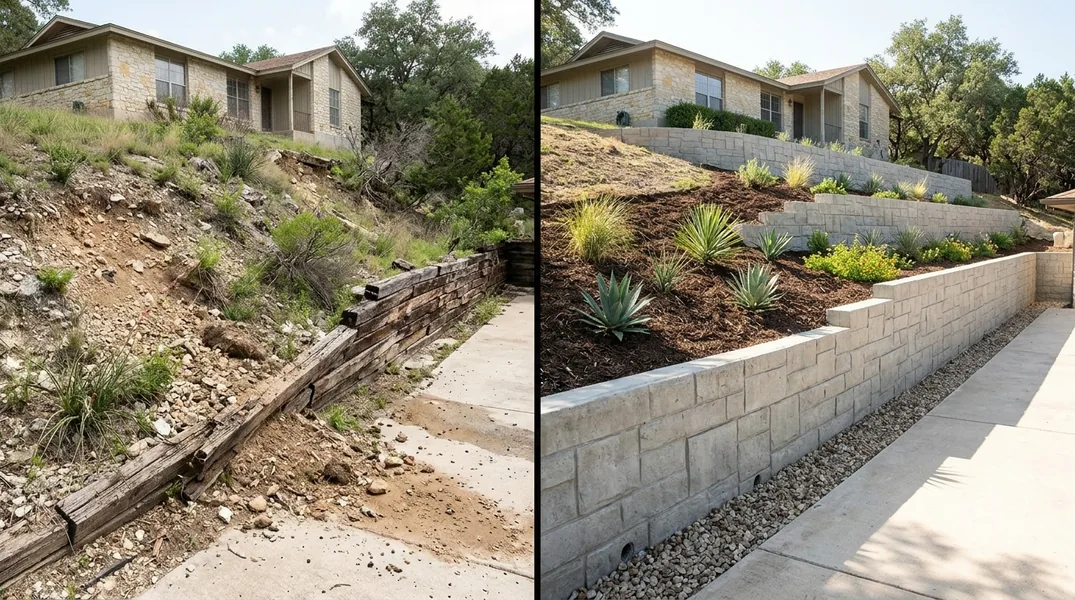
Understanding San Antonio's Unique Soil Challenges
If you own property in San Antonio, you're dealing with some of the most challenging soil conditions in Texas. The region's combination of expansive clay and limestone bedrock creates an environment where retaining walls face constant stress, even when they're properly constructed. Unlike sandy or loamy soils found in other parts of the country, San Antonio's clay expands when wet and contracts when dry, placing tremendous lateral pressure on any wall structure built to contain it.
This soil behavior is the primary reason why so many retaining walls in the area develop problems within just a few years of installation. When clay absorbs moisture during our frequent spring rains or from irrigation systems, it can expand by as much as 10 to 15 percent. This expansion doesn't happen uniformly, and the pressure it generates can exceed what most residential retaining walls were designed to handle. Add limestone layers underneath, which are harder to excavate and can create poor drainage conditions, and you have a recipe for wall failure. Understanding these geological realities is the first step toward protecting your property investment.
Common Warning Signs of a Failing Retaining Wall
A Retaining Wall Repair becomes necessary when you start noticing specific physical indicators that your wall is under stress. The most obvious sign is visible leaning or tilting, where the top of the wall moves noticeably away from the soil it's meant to contain. This bowing effect happens gradually as soil pressure accumulates, and it's often one of the last warnings you'll get before serious structural failure occurs. If your wall is leaning, you should treat it as an urgent matter and seek professional assessment immediately.
Other critical warning signs include horizontal cracks running across the wall face, particularly in Concrete Retaining Walls, which indicate the structure is being pushed beyond its load capacity. You may also notice water seeping or pooling behind the wall, which suggests drainage failure and ongoing soil saturation. Vertical cracks, bulging sections, or gaps between the wall and the soil behind it are equally concerning. In some cases, soil actually begins to spill over the top of the wall or erodes from behind it. These aren't cosmetic issues; they're structural emergencies that demand immediate attention from qualified professionals.
How Drainage Failure Accelerates Wall Deterioration
Poor drainage is perhaps the single most common reason retaining walls fail prematurely in Alamo Heights and throughout the San Antonio region. When water accumulates behind a retaining wall, it adds weight and hydrostatic pressure that the structure simply cannot manage. Many older walls or poorly installed walls lack adequate drainage systems, which means every heavy rain adds to the burden the wall must bear. Over time, this constant water pressure weakens the wall materials themselves, whether they're concrete, stone, or timber.
The problem is compounded by San Antonio's clay soil, which doesn't allow water to percolate downward easily. Instead, water sits in the soil behind the wall, creating a heavy, saturated mass that pushes relentlessly against the structure. Additionally, freeze-thaw cycles, though less severe than in northern climates, still occur in winter and can cause cracks to expand. Proper drainage systems, including perforated drain pipes, gravel backfill, and surface water management, are essential to preventing this type of failure. If your wall was installed without these features, Retaining Wall Repair should include upgrading the drainage system to extend the wall's lifespan significantly.
Material-Specific Failure Patterns in San Antonio
Different retaining wall materials fail in different ways when exposed to San Antonio's soil and climate conditions. Timber walls, while popular for their aesthetic appeal, are particularly vulnerable because wood deteriorates over time, especially when in constant contact with moist soil. The expansive clay that surrounds timber walls adds pressure just as the wood loses its structural integrity, creating a compounding problem. Most timber retaining walls in the area begin showing significant failure signs within 8 to 15 years, depending on the quality of the wood and maintenance.
Concrete Retaining Walls have better longevity but face their own challenges. Concrete can crack under pressure from expanding soil, and once cracks form, water infiltration accelerates deterioration. The limestone base layer common in San Antonio can also cause uneven settling, which puts stress on concrete walls that weren't designed with flexibility in mind. Stone and brick walls may look impressive, but if they weren't built with proper internal reinforcement and drainage, they too will bow, crack, and eventually fail. The key is understanding that no material is immune to failure without proper installation, drainage, and maintenance tailored to local soil conditions.
When to Call a Professional for Retaining Wall Repair Near Me
If you've noticed any of the warning signs mentioned above, it's time to contact a professional. While minor cosmetic repairs can sometimes be handled by homeowners, structural issues require expertise that only experienced contractors possess. San Antonio Retaining Wall has served the community for years, and our team understands the specific challenges that local soil and climate conditions present. We can assess whether your wall needs simple repairs, comprehensive Retaining Wall Repair, or complete Retaining Wall Replacement.
A professional inspection will reveal the root causes of any failure, not just the visible symptoms. This is crucial because treating only the surface problem often leads to the same failure happening again within a few years. Our team will examine drainage conditions, soil composition, wall construction, and load factors to develop a solution that actually addresses the underlying issues. Don't wait until your wall collapses or threatens nearby structures. Call us at (726) 200-6830 today to schedule your free estimate, or visit our website to learn more about our repair and replacement services.
Prevention and Maintenance: Protecting Your Investment Long-Term
The best approach to retaining wall problems is preventing them from occurring in the first place. If you're planning new Retaining Wall Installation, work with contractors who understand San Antonio's soil conditions and design walls accordingly. This means proper drainage systems, adequate reinforcement, appropriate material selection, and professional installation. The upfront investment in quality construction is far less than the cost of major repairs or replacement later.
For existing walls, regular maintenance makes a significant difference. Keep gutters and downspouts directed away from the wall to prevent water accumulation. Monitor the wall regularly for the warning signs we discussed, and address small issues before they become large ones. Ensure vegetation behind the wall doesn't create additional weight or root damage. If you notice any changes in your wall's appearance or condition, have it inspected promptly. San Antonio Retaining Wall is here to help with preventive assessments, repairs, and replacements whenever you need us. Contact us at (726) 200-6830 or request a free estimate to discuss how we can protect your property.
Looking for a professional retaining wall contractor in San Antonio? San Antonio Retaining Wall responds fast for all your retaining wall needs.
Get a Free QuoteOur services: Retaining Wall Installation · Retaining Wall Repair · Retaining Wall Replacement